
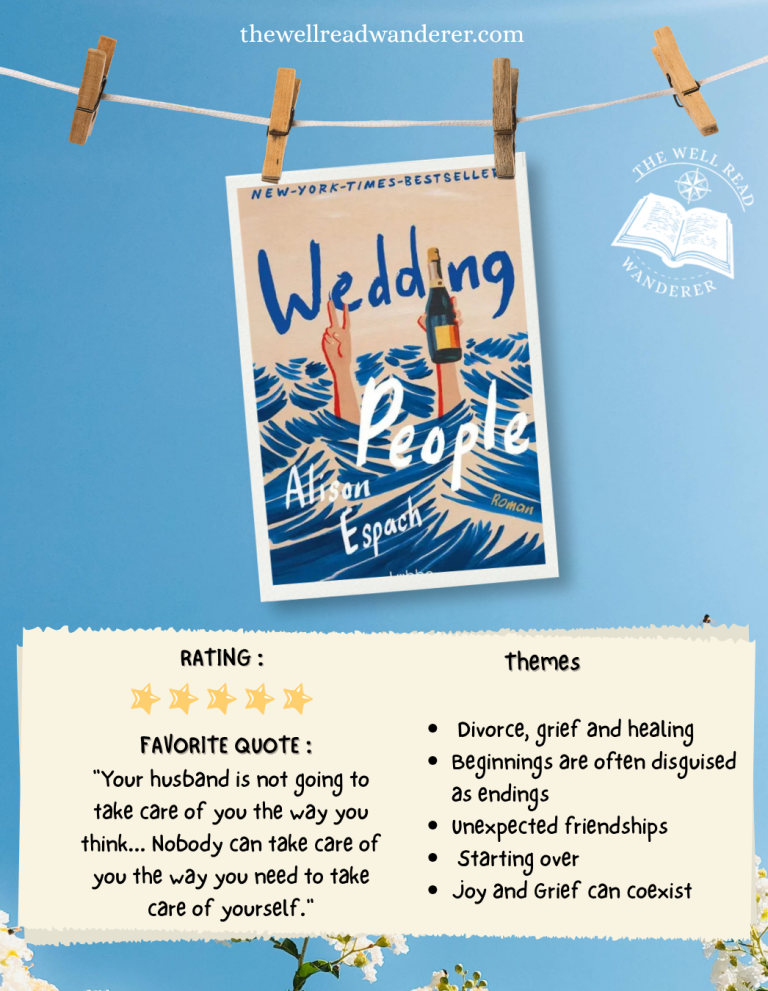
The Wedding People
By Alison Espach
The Wedding People resonated with me because it captures how difficult it can be to imagine a new beginning when life turns out differently than you expected.
Set against the backdrop of a wedding in Rhode Island, the novel contrasts the bride, Lila's hopeful new chapter with Phoebe's unexpected journey of healing, self-discovery, and rebuilding her life after a devastating divorce.
What makes the story especially moving is the unlikely friendship that develops between Phoebe and Lila, showing how two people at very different crossroads can offer each other understanding, compassion.
Rather than focusing on finding love again, the novel celebrates resilience, personal growth, and the courage to embrace a new version of yourself when the future looks nothing like you imagined.
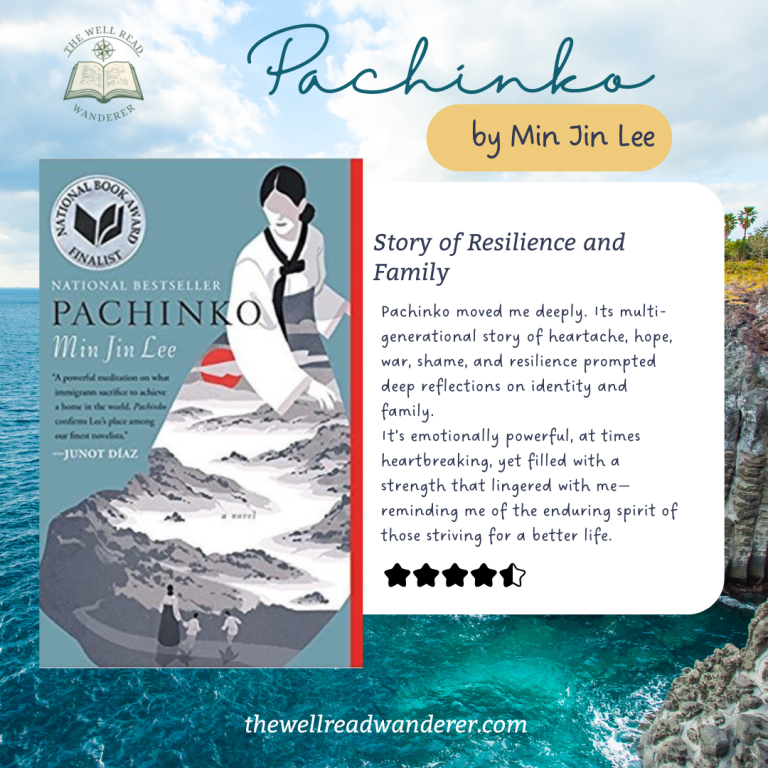
Pachinko
By Min Jin Lee
Pachinko is an emotionally powerful saga that spans multiple generations, immersing the reader in the lives of characters grappling with heartache, hope, and resilience.
The storytelling is beautifully layered, offering a nuanced exploration of themes like war, cultural identity, shame, and perseverance.
It’s a story that made me reexamine my understanding of family and self, highlighting the strength it takes to endure even the darkest times. Particularly through the lens of the Second world war and my own family's endurance through the Japanese occupation. Really examines and highligts the impact of trauma through generations.
Heartfelt and sometimes heartbreaking, Pachinko celebrates the unbreakable human spirit and serves as a poignant reminder of the sacrifices made by those fighting to create a better future for their loved ones. An unforgettable epic read that lingers long past the last page.
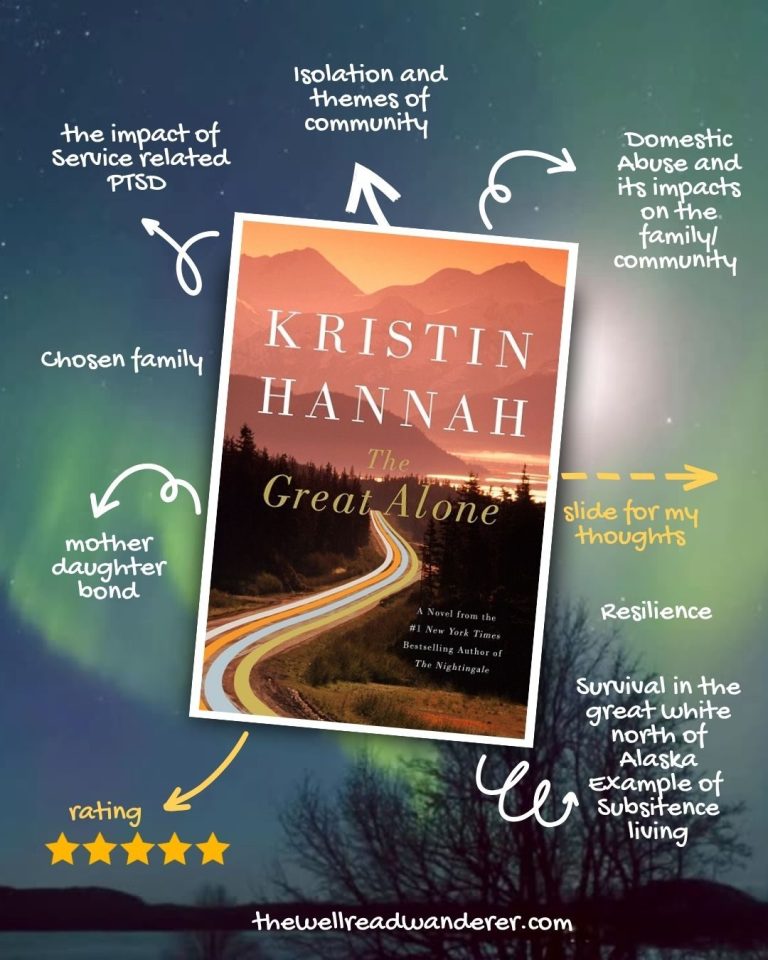
The Great Alone
by Kristin Hannah
What stayed with me most was the fierce love between a mother and daughter—and the extraordinary strength they find in one another when the world around them becomes increasingly unforgiving.
Kristin Hannah captures isolation in two powerful ways: the physical isolation of the remote Alaskan wilderness, with its brutal winters, darkness, and constant demands for survival, and the emotional isolation of living in an abusive household, where fear can make your world feel just as small and inescapable.
Having lived above the 55th parallel in rural Canada, that sense of place felt especially real to me. I could relate to the long, unforgiving winters and the remoteness—the feeling that nature itself can dictate the rhythms and boundaries of your life. That personal connection made me feel even more deeply for these characters and the circumstances they were trying to survive.
But ultimately, The Great Alone wasn't the wilderness that stayed with me. It was the relationship between mother and daughter. Their love is complicated, protective, sacrificial, and incredibly resilient. Again and again, they become one another's refuge when there is nowhere else to turn.
For me, that is the heart of this story: sometimes survival isn't about being strong enough to stand alone. It's about the person who refuses to let you face the darkness alone.
Beautiful, heartbreaking, and unforgettable.
I loved it.